Zygomatic implants for international patients: before you fly, in Blumenau, Brazil, and after you're home
I was told I don't have enough bone, and I live abroad. Where do I start?
If you live outside Brazil and have been told there isn't enough bone for implants — or a graft didn't take — this guide comes from the surgeon you'd be flying to see: Dr. Fernando Giovanella, in Blumenau, southern Brazil. You start where you are, with a scan.
Here is what surprises people. The shortest part of this treatment happens in Blumenau. It begins at home, with a CBCT taken near where you live and read by me before anyone mentions a flight. And it ends at home — which is why the longest section of this guide is about what happens after you fly back.
Many of the people reading this aren't the patient. If you're researching for a mother or a father, every section was written to be read aloud to them, or forwarded. Where the research is less reassuring than a brochure would be, you'll read that too. And the price: there isn't one here, and the reason is further down.
A CBCT scan, not a photo. I read it myself and answer in writing, preliminary until I examine you in person. The message includes your consent to how the clinic handles health data — read it first.
Can I get zygomatic implants in Brazil if I live in another country?
Yes. People living abroad have zygomatic implants with Dr. Fernando Giovanella, an oral and maxillofacial surgeon1 in Blumenau, southern Brazil, in two trips: at least seven days for the surgery, then at least three days for a check-up, three to four months later. It starts at home: you send a CBCT scan, he reads it himself and replies in writing, and you talk by video before booking a flight. A physician anesthesiologist gives the anesthesia. Back home, messages get a written reply the same business day.
Who is a candidate for zygomatic implants?
Zygomatic implants are for an upper jaw that has lost too much bone to hold conventional implants — the person who has heard "no", sometimes more than once, or whose graft didn't take — and the first thing Dr. Fernando Giovanella looks for on a scan sent to Blumenau, Brazil, is whether you need them at all. Sometimes you don't.
Being told "not enough bone" after a flat X-ray isn't the same as having none on a CBCT. If the front of the jaw still has bone, tilted implants may carry a full bridge with a smaller operation; if there's bone behind it, pterygoid implants may hold the back. Zygomatic implants come in when neither is there. They're an upper-jaw option, for a full fixed bridge rather than a single tooth.
What rules them out is decided the same way: by your scan, your medical history and a conversation — not by a form.
The whole range, smallest step first, is set out in your options when you've been told there isn't enough bone. At its far end sits one more option, for the jaw with almost nothing left.
What if there is almost no bone at all? What is a quad zygoma?
A quad zygoma is four zygomatic implants — two in each cheekbone — carrying a full fixed upper bridge with no conventional implants in front, and Dr. Fernando Giovanella plans it in Blumenau, Brazil, only when the CBCT shows that even the front of the upper jaw, between the canines, has no bone an implant could use.
It's the plan for the jaw where every other anchor has run out. Two implants have to share each cheekbone, so nothing is left to the day: both paths are drawn on your scan beforehand, and a guide of my own design carries them to the bone.
Four long implants is a larger operation than two with conventional implants in front. That's why it's chosen only when nothing smaller would hold — never because "four" sounds more definitive. I won't promise you an outcome on a web page. If your scan calls for it, you'll have the reasons in writing; if it doesn't, you'll have that in writing too.
Whether any of this is worth it is a fair question. The research answers it with a trade.
What are the pros and cons of zygomatic implants, according to the research?
The research on zygomatic implants says two things at once, and Dr. Fernando Giovanella, who places them in Blumenau, Brazil, would rather you hold both: the implants hold well, and they ask more of the sinus. None of the figures below is his; they're pooled from many surgeons and many patients.
In their favor. Reviews report 95.21% of zygomatic implants still in place at twelve years3 and 96.2% at six4 — level with conventional implants over five years or more, 96.5% against 95.8%, with no significant difference5. Set against the usual alternative, a bone graft followed by implants, the 2026 Cochrane review found that at three years they probably fail less often and get people to fixed teeth sooner6.
Against them. The same review found they probably bring more complications — moderate-certainty evidence, from a single randomized trial6. Sinusitis heads the list, reported from about 2–4% up to 14%3,4,7, and the path the implant takes explains much of that spread: in a 2024 meta-analysis it ran from 21.62% with one technique to a reported 0.00% with the one that keeps the implant outside the sinus, with a statistical margin up to 1.22%7.
How I lower that risk. The route is chosen before surgery, not in the chair. Each implant's path is planned on a computer simulation built from your CBCT, and a thin printed guide of my own design — the SkinGuide Zygoma® approach — carries that path to the bone, so the implant follows the outer wall of the sinus, according to your anatomy, with no large window opened into it. The principle comes from the studies: in a 2010 prospective study, surgeons lifted the sinus membrane away and placed 37 zygomatic implants in 16 patients completely outside the sinus; over six to 24 months, none failed and no sinusitis was reported44. Sixteen patients and one team — a principle to plan around, not a promise.
The detail, and what to watch for at home, is in complications and the sinus, in detail. The numbers tell you whether the treatment holds up. They don't tell you how it would run for someone who lives an ocean away.
How does treatment work if I live in another country?
For someone who lives abroad, treatment with Dr. Fernando Giovanella in Blumenau, Brazil, runs in a fixed order — scan, written reading, video consultation, written plan and quote, the surgery trip, follow-up from home, the return trip — and no step starts before the one ahead of it is finished.
- A CBCT scan, taken near home. A cone-beam CT of your upper jaw, as DICOM files: not a photo, not a panoramic X-ray. What kind, and how to send it, is answered in the questions below.
- My reading, in writing. I read the scan myself and write back: which option fits you — or that you don't need zygomatic implants. It's preliminary until I examine you in person.
- A video consultation with me, before any flight — paid in advance and preliminary, with a short consent form first. Your scan on the screen, your questions, and your family's.
- The plan and the quote, in writing. What will be done, how many implants, how many days, what's included and what isn't — see how the quote works.
- The surgery trip: at least seven days in Blumenau. The pre-operative visit, the surgery, the reviews, your fixed teeth — provisional ones the same day as the surgery, or the final ones three to five days after it, depending on your case — and your clearance to fly, given in person at the last review.
- Follow-up from home. A channel that stays open, with a written reply the same business day and anything clinical answered by me. No video check-in is scheduled between the two trips; if you need a call, one is booked — what happens after you fly home.
- The return trip, three to four months later: at least three days. Back in Blumenau, I check osseointegration — whether the bone has grown onto the surface of each implant and holds it firmly — and finish your final teeth, if they weren't finished on the first trip, or make any final adjustments. It's in the written plan from the start, not added later.
One person coordinates all of it with you in English — Andreza, at my clinic, on WhatsApp Monday to Friday, 8:30 a.m. to 5 p.m. Brasília time (UTC−3) — and anything clinical comes straight to me.
Step five is where most questions narrow to one: where, exactly, is the operation done, and who is in charge of the anesthesia?
Where is the surgery done, and who gives the anesthesia?
Dr. Fernando Giovanella operates in Blumenau, Brazil, at his clinic, under intravenous sedation given and monitored throughout by a physician anesthesiologist — a medical doctor — or, when general anesthesia is the better choice, at Hospital Unimed Blumenau's day-surgery unit downtown. Either way, it's planned as same-day surgery: you go home the same day.
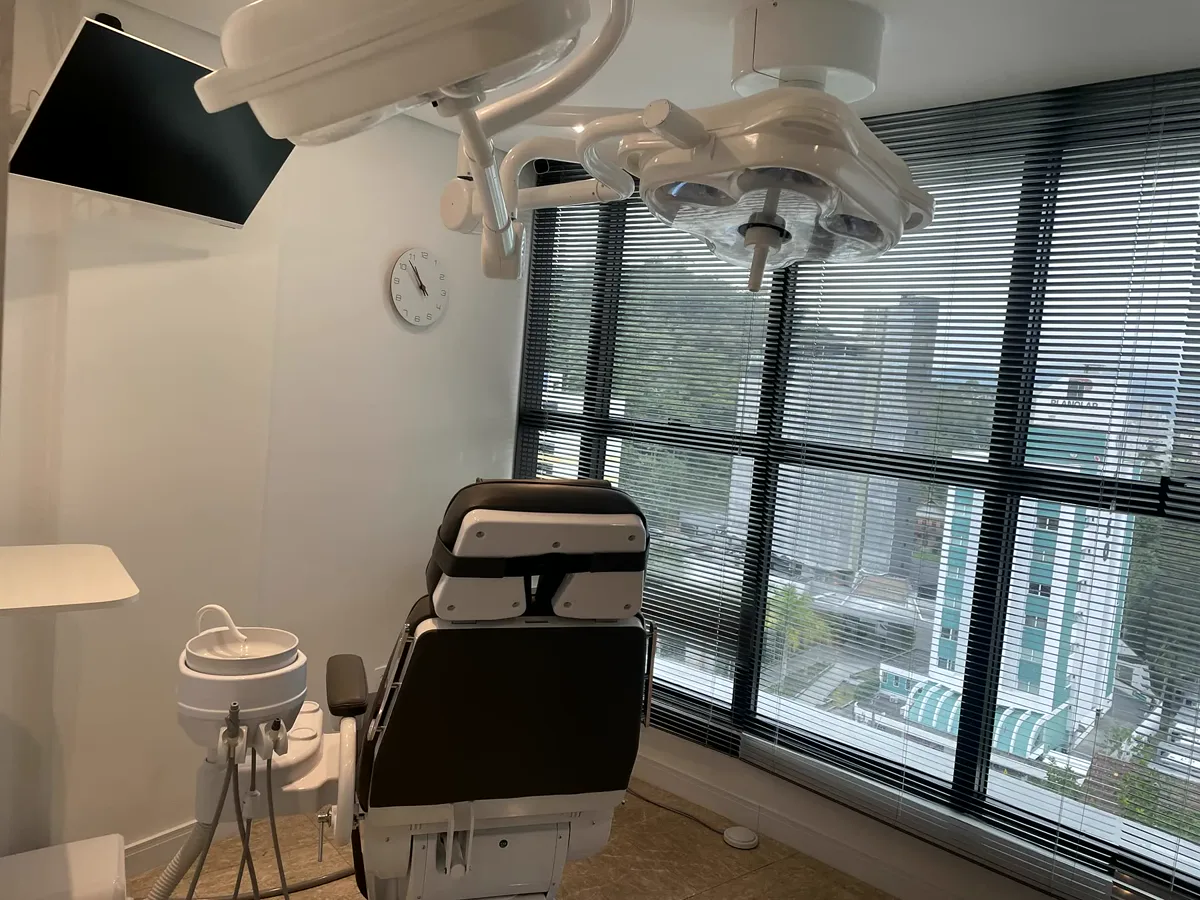
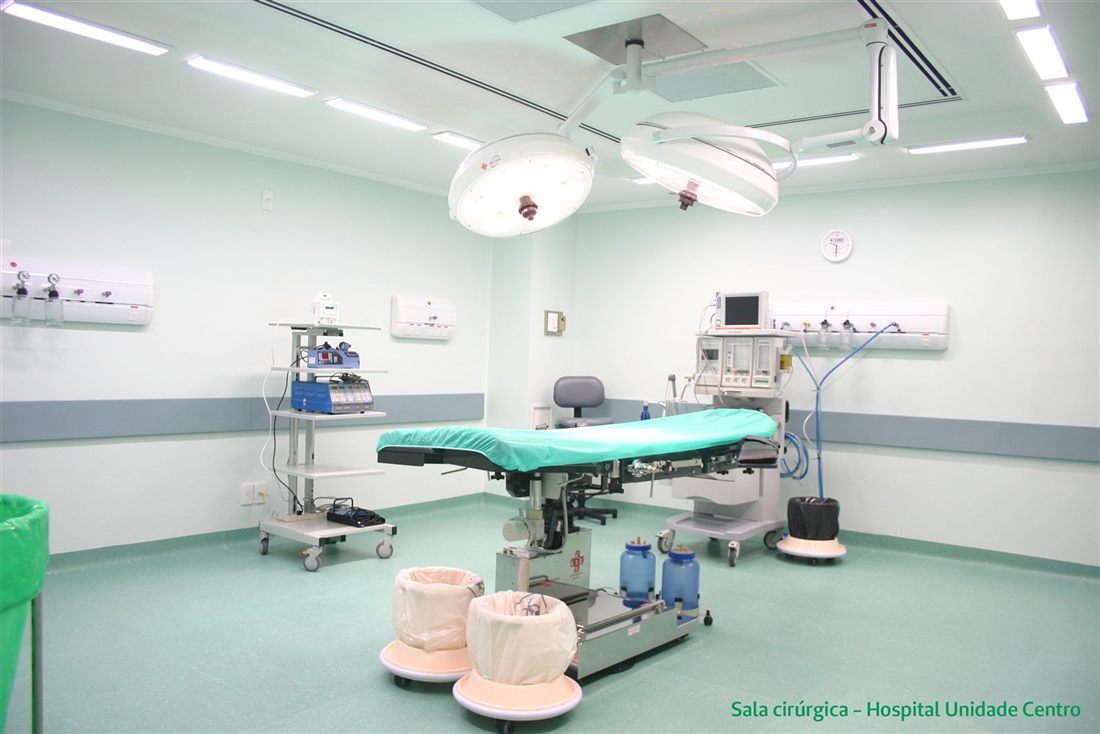
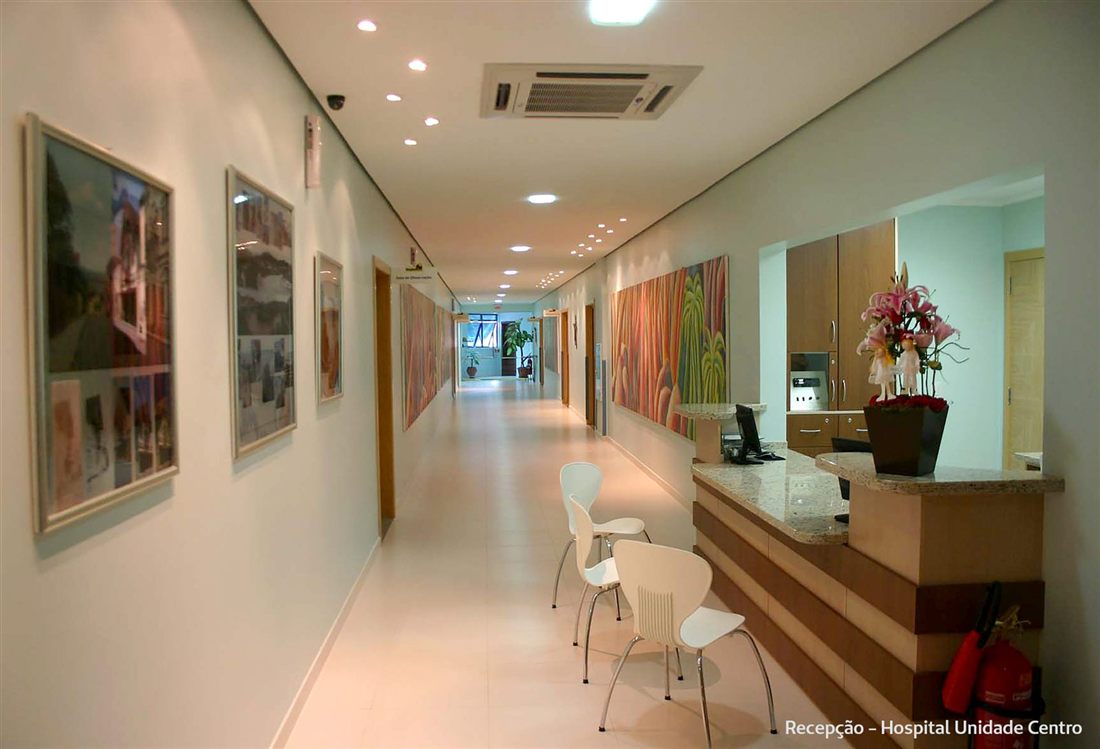
In both settings the anesthesia has its own doctor. The anesthesiologist stays with one patient, you, from the first minute to the last, watching your monitors while I operate: my attention on the surgery, theirs on you. They come from Anesteclin, an anesthesiology group in Blumenau: its physicians give the sedation at my clinic and the general anesthesia at the hospital. Its website lists each of them with their medical-council and specialist registration numbers11.
| At the clinic | At the hospital (day surgery) | |
|---|---|---|
| The anesthesia | intravenous sedation | general anesthesia |
| Who gives it | a physician anesthesiologist from Anesteclin | a physician anesthesiologist from Anesteclin |
| Where | the clinic's own surgical suite, in Blumenau | Hospital Unimed Blumenau – Unidade Centro, downtown |
| When it's chosen | most cases | a longer or more complex operation; a health condition that calls for closer monitoring; or your preference |
| Going home | the same day, to your hotel — no hospital stay | the same day |
| How long the surgery takes | two to four hours | two to four hours |
Which one is yours isn't settled on the day. I decide it with the anesthesiologist, from your scan and your medical history, and you know before you travel, with every cost shown to you first. If you'd simply rather be fully asleep, say so: your preference is one of the reasons on the list.
If it's general anesthesia, you'd be at Hospital Unimed Blumenau's day-surgery unit downtown — the Unidade Centro, in the Neumarkt Trade & Financial Center, beside the Neumarkt shopping mall. It's set up for planned (elective) surgery: five operating rooms and a post-anesthesia recovery room, where you're watched while the anesthesia wears off12,13. A hospital's operating room, then, without a hospital stay.
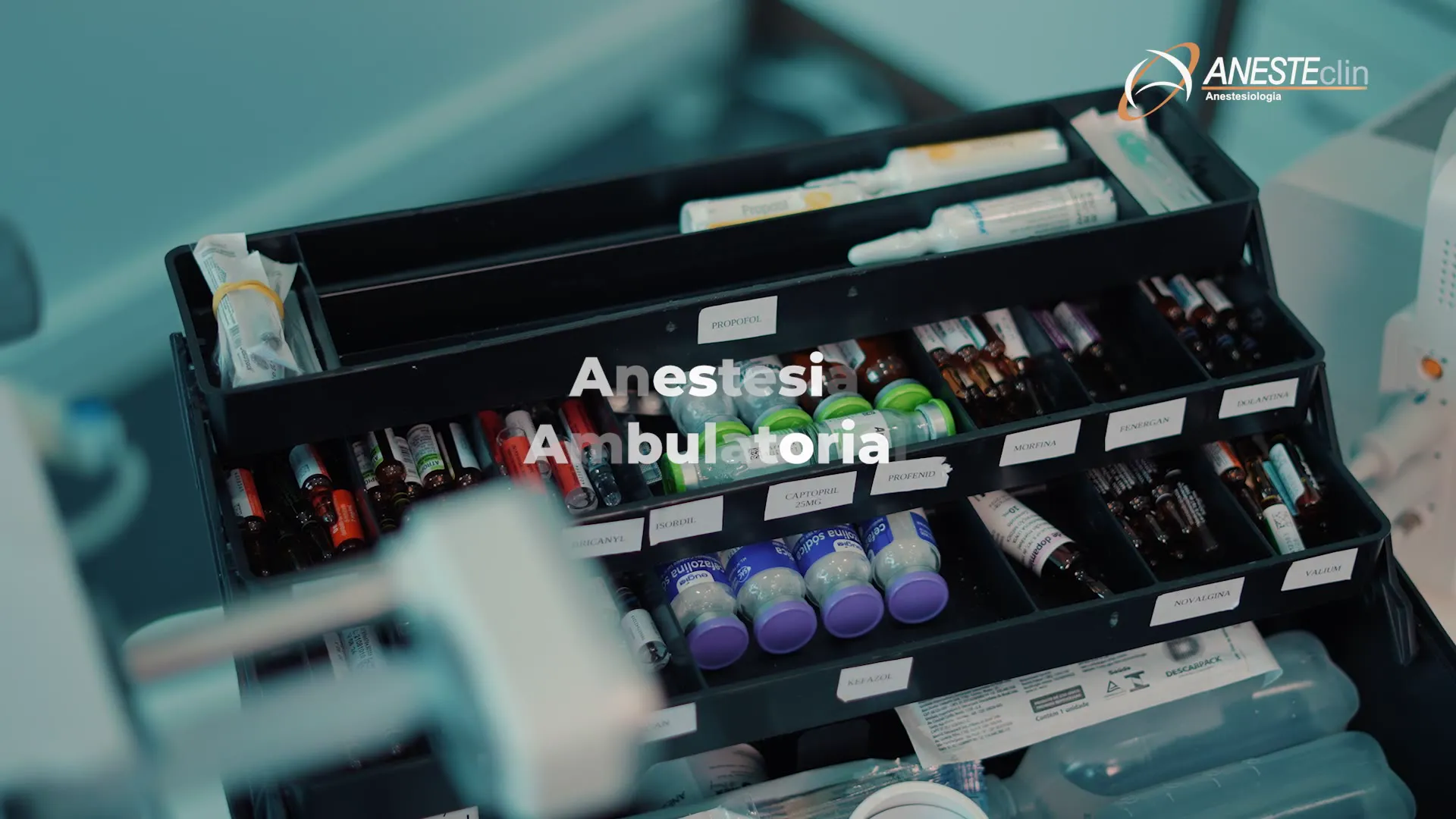
The surgery takes two to four hours. Living with what it builds takes years, most of them far from me — so that's where this guide spends the most time.
What happens if something goes wrong after I fly home?
If something doesn't feel right once you're home, you write to the clinic in Blumenau, Brazil, on WhatsApp and get a written reply from Andreza the same business day — Monday to Friday, 8:30 a.m. to 5 p.m. Brasília time (UTC−3), or the next business day after hours; anything clinical is read and answered by Dr. Fernando Giovanella himself — by message, or on a video call when it needs one.
What you take home. An implant passport, in English, for every international patient: every part placed, by maker, line, size and lot number, with the connection, the screws and their torque, and your post-operative scans. It lets a dentist in your town work on what's in your mouth without guessing.
Whether your dentist at home can work on them. On the parts that need attention over the years — the bridge, the abutments, the screws — yes, provided the parts can be ordered where you live. The implants are Neodent, a Straumann Group company17, in most cases; S.I.N. in some zygomatic cases, chosen on your scan — your passport names the system you received. Neodent parts are on sale in the Straumann Group's own Neodent shops in the United States, Canada, the United Kingdom and Australia18.
Who pays if something has to be redone in Blumenau. That rule is written down before you book your first flight, not negotiated after a problem: the work is covered by the clinic's warranty — three years on the implants and two years on your final teeth, under the conditions in the written warranty — and your flights and hotel are not, whether the trip is for a repair or for the return already planned at three to four months. For the redo itself, the laboratory, the clinic's operating costs — chair time, staff and materials — and the anesthesia, the hospital and a new implant with its abutments are quoted to you first, unless the manufacturer replaces the part at no cost under its own warranty program.
The passport field by field, the signs to watch for and what your dentist receives are all in the full plan for after you fly home. And the question that usually follows "what if something goes wrong" is "what will all of it cost?"
How much do zygomatic implants cost in Brazil, and why is there no price here?
There's no price on this page because Dr. Fernando Giovanella, in Blumenau, Brazil, can't give you an honest one before he has read your CBCT: two zygomatic implants or four, conventional implants in front or none — the scan decides it, and a number given before the scan is a guess you'd be planning a trip around.
You may already have a number from home — one that ended the conversation there. What I can offer instead is a written quote, after the scan and the video consultation, tied to the written plan and with each item named: the surgery; the anesthesia and, if it's general anesthesia, the hospital; your fixed teeth; the reviews on both trips; the post-operative CBCT; your implant passport; and the clinic's driver, at Navegantes and on your clinic days. What isn't included is named too: flights, hotel and meals. The clinic's warranty is part of your treatment contract — three years on the implants and two years on your final teeth, under the conditions in the written warranty — with the plain line that flights and hotel are not covered, not even for a repair. Payment from abroad is by Wise or PayPal; the details come with the plan.
One thing I say to everyone who asks about price. Too expensive, you pay on the way in. Too cheap, you pay on the way out — in a repair, an unplanned trip, or a part nobody where you live can order.
Which leaves the question underneath all the others: why Brazil at all?
Does Brazil have good dentists?
Brazil has more registered dentists than any other country19,20 and is one of the world's largest producers of dental research21,22 — two facts with sources, which is how Dr. Fernando Giovanella, a surgeon trained in Brazil who operates in Blumenau, would rather answer the question than with an adjective.
Two more. The University of São Paulo ranks 15th in the world for dentistry in the QS World University Rankings by Subject 202623,24. And the technique has a history: the zygomatic implant was developed in the late 1980s by Per-Ingvar Brånemark, the Swedish scientist known as the father of osseointegration25,26,27. If part of you worries about being a test case, the line of patients ahead of you started decades ago.
None of this makes any one dentist good, in Brazil or anywhere else. It tells you the country isn't the risk; the surgeon is the choice that matters, and further down you'll find how to check him. First, the city you'd be staying in.
Blumenau, in numbers that come with a source
In 2024, Blumenau — home to Dr. Fernando Giovanella's clinic, in the southern Brazilian state of Santa Catarina — had the lowest homicide rate of any Brazilian city with 200,000 to 500,000 residents: 5.0 per 100,000, in the Safest Cities in Brazil Yearbook 2025, built on Ministry of Health records28,2928,30.
The state points the same way: Santa Catarina had Brazil's lowest rate of intentional violent deaths in 2025, 7.6 per 100,00031,32. For scale, the U.S. national murder rate in 2024 was also 5.0 per 100,000 (FBI)33,34 — counted from police reports rather than death certificates, so take it as a sense of proportion, not a contest.
Each figure, with its source and what it leaves out, is in Blumenau's safety figures and their sources. A safe city is still only a city. What decides more is whose hands you're in.
Who will operate on me, and how can I check his credentials?
You'd be operated on by Dr. Fernando Giovanella, an English-speaking zygomatic implant surgeon in Blumenau, Brazil. The one who reads your scan is the one who operates, and the one who answers after you fly home: always me.
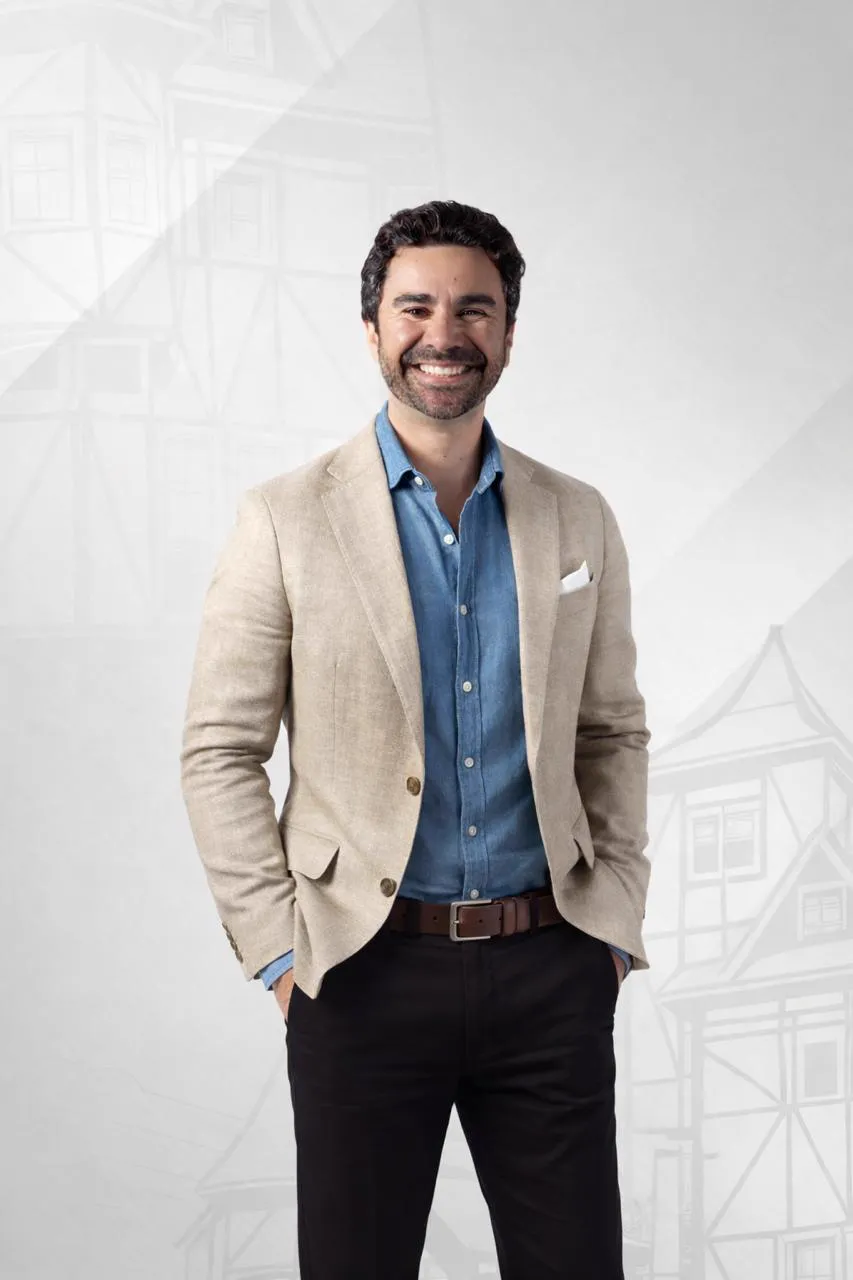
Check that before anything else. In Brazil, a dentist may present only a specialty registered with the dental council; advertising one you don't hold is an ethics violation35,36. My registration, CRO-SC 8237, lists two: Oral and Maxillofacial Surgery and Traumatology, and Implant Dentistry1. To check, search "Fernando Giovanella", Santa Catarina, in the public registries of the Santa Catarina Regional Dental Council and the Federal Council of Dentistry1,2.
The rest is on paper, and you can look all of it up:
- Master of Science in Dentistry (Implantology), USC Bauru — Universidade do Sagrado Coração, now UNISAGRADO — Brazil, 201137,41
- Author of ZIGOMA 2.0 — A nova era dos implantes zigomáticos (Napoleão Quintessence, 2023, 232 pages, in Portuguese)38, and of ZYGOMA 2.0 – The New Age of Zygomatic Implants (English edition, 2020)
- Sole author of a 2025 clinical report in the Journal of Prosthetic Dentistry on graftless full-arch rehabilitation through a facial approach39; first author of a 2024 technical note in Cureus on a modified flap approach to All-on-Four40
- Speaker at IN26, the 12th edition of the IN oral-rehabilitation congress (São Paulo, September 22–25, 2026), which had more than 250 speakers4141
- Creator of SkinGuide Zygoma®, a registered trademark in Brazil (INPI no. 937121835)42, and designer of two surgical instruments with utility-model applications pending in Brazil: a cannulated drill system and a zygomatic flap retractor4242
Comparing surgeons is normal, and I'd expect you to.
One more way to judge a surgeon: look at who comes to learn from him.
Who trains with Dr. Giovanella, and where?
Surgeons who want to learn zygomatic implants come to Brazil to train with Dr. Fernando Giovanella on live patients: he is an instructor of the Full Arch Zygomatic Implant Live Patient Course, run by Expert Dental Solutions at the Fluminense Federal University (UFF) School of Dentistry in Niterói — six participants at most, 36 continuing-education credits43.
Why tell a patient this? Because an operation you teach is an operation you have to explain, step by step, to surgeons who would notice if you couldn't.
From the people who come to learn, to the practical part: how you'd get here.
Getting here: one connection inside Brazil, then an hour by car
To reach Dr. Fernando Giovanella's clinic in Blumenau, Brazil, you fly into Navegantes (NVT), about an hour from the clinic by car14. There are no international flights into Navegantes, which means one change of plane inside Brazil — almost always at São Paulo–Guarulhos15. From the U.S. cities with direct flights to São Paulo, count on about 14 to 18½ hours in total, connection included16. The clinic's private driver meets you at Navegantes, at any arrival time, takes you between your hotel and the clinic on the days of surgery and reviews, and takes you back to the airport — all included in your quote. Florianópolis or Curitiba can be arranged at extra cost.
Where to stay: three hotels near the clinic, booked by you
Most patients who travel to Dr. Fernando Giovanella in Blumenau, Brazil, sleep a few minutes' drive from his clinic, in one of three hotels he suggests, each suited to a different kind of stay14. You book directly with the hotel; the clinic suggests, and sells no rooms.
Your days in Blumenau: mostly rest, and short trips to the clinic
Most of the seven days or more you spend in Blumenau, Brazil, on the first trip are quiet ones: the pre-operative visit, the surgery with Dr. Fernando Giovanella, rest at the hotel, short reviews at the clinic, and your fixed teeth: provisional ones the same day as the surgery, or the final ones three to five days after it. For the first three days you eat liquid and cold food, then soft food for eight weeks. Someone has to stay with you for the first 24 hours after sedation or anesthesia, and I'd recommend company for the whole trip. The second trip, three to four months later and at least three days long, is for the check — how the implants have taken in the bone — and for your final teeth: finished then, if they weren't on the first trip, or adjusted.
Whoever comes with you will find more within reach than a hotel room — see half-day trips for the person traveling with you.
Others have made this trip already.
Have other patients from abroad done this?
Yes. Patients have come to Dr. Fernando Giovanella's clinic in Blumenau, Brazil, from the United States and Canada. Two of their results, before and after, are shown with their consent in the Blumenau travel guide.
You won't find star ratings anywhere in this guide; ratings can be bought. What you can check is on these pages: the study behind each number, the registration behind each title, and the written warranty.
If you've read this far, you probably have questions of your own. Here are the ones that come up before anyone books a flight.
Questions you'll want answered before you book a flight
Are zygomatic implants worth it?
When you need them, the studies give good reasons — and one trade you should know about. A 2023 meta-analysis reported 96.2% survival at six years4, comparable to conventional implants over five years or more5; against a bone graft, the 2026 Cochrane review found they probably fail less and reach fixed teeth sooner, but probably bring more complications6. "When you need them" is the real condition. If a smaller operation will do, that's the one worth having.
Is it a good idea to get zygomatic implants abroad?
It can be, if three things are settled before you fly: a surgeon whose registration you can check has read your CBCT; the plan, the quote and the rule for problems are in writing; and you know who answers once you're home, and how fast. If any of the three is vague, the distance becomes the risk. The third is the hardest to get a straight answer to, so this guide gives it its own section: after you fly home.
What kind of CBCT scan do I need, and how do I send it?
A cone-beam CT (CBCT) of your upper jaw, with a field of view wide enough to include both cheekbones, saved as DICOM files — the full set, not screenshots or a panoramic X-ray. A dental imaging center near you can take it and hand it over on a disc, a USB drive or a download link. Send the link on WhatsApp or to atendimento@fernandogiovanella.com; Andreza confirms it arrived the same business day, and my written reading follows.
Can you tell whether I'm a candidate without seeing me in person?
Mostly, yes. The scan answers the question that decides most cases: where your bone is, and how much. What it can't show is your general health, your gums, your bite or what you hope for — that's what your medical history and the video call are for. So the written reading is preliminary until I examine you in Blumenau. If the exam changes the plan, you hear it from me before the day of surgery.
How many trips to Brazil will I need?
Two, both planned from the start. The first, at least seven days, is for the surgery and your fixed teeth; you fly home after I clear you at the last review. The second, at least three days, comes three to four months later: I check that the bone has grown onto each implant, and finish or adjust your final teeth. A third trip would mean a problem; who pays is in after you fly home.
Does Dr. Giovanella speak English, and who answers my messages?
Yes. The video call, the consultations and the surgery are with me, in English. Day to day, your messages go to Andreza at my clinic, who coordinates every step in English, Monday to Friday, 8:30 a.m. to 5 p.m. Brasília time (UTC−3); anything clinical is passed to me, and I answer it myself. Replies come the same business day, in writing, which helps if you want to reread them later or show them to your family.
Can I talk to the surgeon before I book a flight?
Yes, and I'd want you to. After I've read your scan, we have a video consultation — paid in advance and preliminary, with a short consent form first. Your scan is on the screen, with my reading of it, your questions, and the ones your family wants asked. Nobody should board a plane for surgery without having spoken to the person who will operate. If something is still unclear afterwards, ask for it in writing.
Will my surgery be done in a hospital?
Usually not. Most zygomatic surgery is done at the clinic in Blumenau, under intravenous sedation given by a physician anesthesiologist from Anesteclin, an anesthesiology group11, and planned as same-day surgery: you return to your hotel the same day. When general anesthesia is better — a longer or more complex operation, a health condition, or your preference — the same group gives it at Hospital Unimed Blumenau's day-surgery unit downtown, also as same-day surgery12,13. How the choice is made
Is dental tourism in Brazil safe?
On the published numbers, yes — though it's two questions. The city: Blumenau recorded 5.0 homicides per 100,000 people in 2024, the lowest among Brazilian cities of its size28,2928,30, and the same as the U.S. national rate that year, counted a different way33,34. The surgery: reviews report 95.21% of zygomatic implants still in place at twelve years3 and 96.2% at six4. Neither number is a promise about you; both have their sources below.
Will my health insurance cover treatment in Brazil?
Assume it won't, and ask anyway — in writing. Coverage for planned treatment abroad depends on your plan and your country, and only your insurer can tell you what yours includes. What the clinic can give you for a claim is the written plan and itemized receipts in English, alongside the Brazilian tax invoice. Plan the trip as if nothing will be reimbursed; anything that is, is a bonus.
I'm in my seventies. Can I still travel for this surgery?
Age alone doesn't decide it; your health does. Send your medical history with your scan: the anesthesiologist reads it before anyone buys a ticket. A recent heart attack, stroke or blood clot, heart or lung disease that isn't under control, or ongoing treatment for head and neck cancer usually postpones the trip — or cancels it. And if the honest answer is that the trip isn't wise for you, you'll hear that from me, in writing.
References
- Santa Catarina Regional Dental Council (CRO-SC) — public registry search ("Consulta aos Inscritos"); search "Fernando Giovanella", Santa Catarina. https://cro-sc.implanta.net.br/servicosonline/Publico/ConsultaInscritos/ — accessed 6 October 2026.
- Federal Council of Dentistry (CFO), Brazil — public registry search ("Consulta de inscritos"). https://website.cfo.org.br/consulta-inscritos/ — accessed 6 October 2026.
- Chrcanovic BR, Albrektsson T, Wennerberg A. Survival and complications of zygomatic implants: an updated systematic review. J Oral Maxillofac Surg. 2016;74(10):1949–64. doi:10.1016/j.joms.2016.06.166 · PMID 27422530. https://pubmed.ncbi.nlm.nih.gov/27422530/ — accessed 6 October 2026.
- Brennand Roper M, et al. Long-term treatment outcomes with zygomatic implants: a systematic review and meta-analysis. Int J Implant Dent. 2023;9(1):21. doi:10.1186/s40729-023-00479-x · PMID 37405545. https://doi.org/10.1186/s40729-023-00479-x — accessed 6 October 2026.
- Moraschini V, et al. Survival and complications of zygomatic implants compared to conventional implants reported in longitudinal studies with a follow-up period of at least 5 years: a systematic review and meta-analysis. Clin Implant Dent Relat Res. 2023;25(1):177–189. doi:10.1111/cid.13153 · PMID 36373779. https://doi.org/10.1111/cid.13153 — accessed 6 October 2026.
- Visconti RF, Greco K, Cotticelli C, Ambrosi A, Esposito MA. Interventions for replacing missing teeth: zygomatic implants for the rehabilitation of the severely atrophic edentulous maxilla. Cochrane Database Syst Rev. 2026;7(7):CD004151. doi:10.1002/14651858.CD004151.pub4 · PMID 42489150. https://www.cochranelibrary.com/cdsr/doi/10.1002/14651858.CD004151.pub4/full — accessed 6 October 2026.
- Rocha RS, Vianna CP, Trojan LC, Padovan LEM, dos Santos MCGL. Comparison of sinusitis rate after sinus lift procedure and zygomatic implant surgery: a meta-analysis. Oral Maxillofac Surg. 2024;28(1):63–77. doi:10.1007/s10006-023-01159-1 · PMID 37266797. https://pubmed.ncbi.nlm.nih.gov/37266797/ — accessed 7 October 2026.
- Al-Nawas B, et al. ITI consensus report on zygomatic implants. Int J Implant Dent. 2023;9(1):28. doi:10.1186/s40729-023-00489-9 · PMID 37698775. https://doi.org/10.1186/s40729-023-00489-9 — accessed 6 October 2026.
- Tavelli et al. Survival and complication rate of zygomatic implants: a systematic review. J Oral Implantol. 2022. doi:10.1563/aaid-joi-D-22-00008 · PMID 36473176. https://pubmed.ncbi.nlm.nih.gov/36473176/ — accessed 6 October 2026.
- Sáez-Alcaide LM, et al. Patient-reported outcomes in patients with severe maxillary bone atrophy restored with zygomatic implant-supported complete dental prostheses: a systematic review. Acta Odontol Scand. 2022;80(5):363–373. doi:10.1080/00016357.2021.2018494 · PMID 35044889. https://pubmed.ncbi.nlm.nih.gov/35044889/ — accessed 6 October 2026.
- Anesteclin Anestesiologia, Blumenau — official site, with the team listed physician by physician, each with medical-council (CRM) and specialist (RQE) registration. https://anesteclin.com.br/ — accessed 7 October 2026.
- Unimed Blumenau. "Hospital Dia – Unidade Centro" (planned surgery; five operating rooms; a post-anesthesia recovery room). https://www.unimed.coop.br/site/web/blumenau/hospital-unidade-centro — accessed 7 October 2026.
- Brazilian Ministry of Health — National Registry of Health Establishments (CNES), open-data API: no. 6301223, Hospital Unimed Blumenau Unidade Centro (day hospital; Rua Ingo Hering, 20, downtown Blumenau). https://apidadosabertos.saude.gov.br/cnes/estabelecimentos/6301223 — accessed 7 October 2026.
- OSRM / OpenStreetMap — driving routes from the clinic (Rua Armando Odebrecht, 70, Blumenau) to Navegantes airport (about 55 km, about one hour) and to the three hotels, computed 6 October 2026. https://router.project-osrm.org
- Wikipedia — "Ministro Victor Konder International Airport" (Navegantes: airlines and destinations, all within Brazil). https://en.wikipedia.org/wiki/Ministro_Victor_Konder_International_Airport — accessed 6 October 2026.
- FlightMapper — airline-filed schedules for 2026: Miami, Orlando, Atlanta, New York, Houston and Dallas to São Paulo–Guarulhos; Guarulhos to Navegantes. https://info.flightmapper.net/airport/GRU — accessed 6 October 2026.
- Straumann Holding AG. Media release, "Straumann increases ownership of Neodent to 100%", 7 April 2015 (full reproduction). https://www.marktpuls.ch/artikel/permalink/111805 · Dentaltown. "Straumann to Acquire 49 Percent of Neodent, Brazil's Leading Dental Implant Company", 2012. https://www.dentaltown.com/news/details/7390/straumann-to-acquire-49-percent-of-neodent-brazils-leading-dental-implant-company — accessed 7 October 2026.
- Straumann Group — Neodent online shops: United States (GM Zygomatic Implant 4.0 × 45 mm and GM Mini Conical Abutment with screw, listed in stock); Canada (GM Zygoma-S); United Kingdom; Australia. https://shop.straumann.com/neodent/us/en_us/p/109.1054 · https://shop.straumann.com/neodent/us/en_us/Implant-Lines/Grand-Morse/GM-Abutments/GM-Mini-Conical-Abutment/p/115.281 · https://shop.straumann.com/neodent/ca/en_ca/Implants-and-Abutments/Zygoma-GM/Zygomatic-Implants/GM-Zygoma-S-Implant/p/109.1103 · https://shop.straumann.com/neodent/gb/en_gb/ · https://shop.straumann.com/neodent/au/en_au/ — read 7 October 2026.
- Federal Council of Dentistry (CFO). "Brasil alcança marca de 450 mil cirurgiões-dentistas", 25 October 2025. https://website.cfo.org.br/brasil-alcanca-marca-de-450-mil-cirurgioes-dentistas/ — accessed 6 October 2026.
- Gallagher JE, Mattos Savage GC, Crummey SC, Sabbah W, Makino Y, Varenne B. Health workforce for oral health inequity: opportunity for action. PLOS ONE. 2024. https://journals.plos.org/plosone/article?id=10.1371/journal.pone.0292549 — accessed 6 October 2026.
- OpenAlex — scholarly works in the field of Dentistry, grouped by country, 2023–2025. https://api.openalex.org/works?filter=primary_topic.field.id:35,publication_year:2024&group_by=authorships.countries — accessed 6 October 2026.
- Vieira AR, Castro RD. Brazilian dentistry is among the best in the world. Is it true? Pesqui Bras Odontopediatria Clín Integr. 2022. https://www.scielo.br/j/pboci/a/txkZPtpdG3THTYcKrFNyLbS/?lang=en — accessed 6 October 2026.
- QS Quacquarelli Symonds. QS World University Rankings by Subject 2026 — Dentistry (published 25 March 2026). https://www.topuniversities.com/university-subject-rankings/dentistry — accessed 6 October 2026.
- Poder360. "USP tem 11 cursos entre os 50 melhores do mundo", 29 March 2026. https://www.poder360.com.br/poder-educacao/usp-tem-11-cursos-entre-os-50-melhores-do-mundo/ — accessed 6 October 2026.
- Galán Gil S, et al. Rehabilitation of severely resorbed maxillae with zygomatic implants: an update. Med Oral Patol Oral Cir Bucal. 2007;12(3):E216–20. PMID 17468718. https://pubmed.ncbi.nlm.nih.gov/17468718/ — accessed 6 October 2026.
- Boyes-Varley JG, Howes DG, Lownie JF. The zygomaticus implant protocol in the treatment of the severely resorbed maxilla. SADJ. 2003;58(3):106–9, 113–4. PMID 12856403. https://pubmed.ncbi.nlm.nih.gov/12856403/ — accessed 6 October 2026.
- Sharma S, et al. Per-Ingvar Brånemark (1929–2014): a homage to the father of osseointegration and modern dentistry. Cureus. 2024. https://pmc.ncbi.nlm.nih.gov/articles/PMC11452021/ — accessed 6 October 2026.
- MySide. Anuário Cidades Mais Seguras do Brasil 2025 (Safest Cities in Brazil Yearbook 2025): "Ranking das 30 cidades mais seguras do Brasil em 2025" (data for 2024; published 31 October 2025). https://myside.com.br/guia-imoveis/cidades-mais-seguras-brasil — accessed 6 October 2026.
- MySide. Safest Cities in Brazil Yearbook 2025, South region (Blumenau: 4.99 per 100,000 in 2024). https://myside.com.br/guia-imoveis/cidades-mais-seguras-sul-brasil — accessed 6 October 2026.
- MySide. Safest Cities in Brazil Yearbook 2025, capitals page, with the method: 1.5 million death records for 2024 from the Ministry of Health (SVSA) and IBGE population data. https://myside.com.br/guia-imoveis/capitais-mais-seguras-brasil — accessed 6 October 2026.
- Fórum Brasileiro de Segurança Pública. Anuário Brasileiro de Segurança Pública 2026 (20th edition, July 2026; data for 2025). https://forumseguranca.org.br/anuario-brasileiro-seguranca-publica/ — accessed 6 October 2026.
- Congresso em Foco. "Mortes violentas chegam ao menor patamar em 14 anos; veja mapa", 23 July 2026. https://www.congressoemfoco.com.br/noticia/120720/mortes-violentas-chegam-ao-menor-patamar-em-14-anos-veja-mapa — accessed 6 October 2026.
- FBI. "FBI Releases 2024 Reported Crimes in the Nation Statistics", 5 August 2025 (data for 2024). https://www.fbi.gov/news/press-releases/fbi-releases-2024-reported-crimes-in-the-nation-statistics — accessed 6 October 2026.
- Asher J. "Murder Officially Plunged in 2024", 5 August 2025. https://jasher.substack.com/p/murder-officially-plunged-in-2024 — accessed 6 October 2026.
- Federal Council of Dentistry (CFO). Code of Dental Ethics, Resolution CFO-118/2012, articles 43 and 44 (II). Official PDF: https://website.cfo.org.br/wp-content/uploads/2018/03/codigo_etica.pdf · transcription: https://www.normaslegais.com.br/legislacao/resolucao-cfo-118-2012.htm — accessed 6 October 2026.
- Federal Council of Dentistry (CFO). Resolution CFO-286/2026, 20 March 2026. https://sistemas.cfo.org.br/visualizar/atos/RESOLU%C3%87%C3%83O/SEC/2026/286/ — accessed 6 October 2026.
- Centro Universitário Sagrado Coração (UNISAGRADO), Bauru, Brazil — formerly Universidade do Sagrado Coração. Master's in Dentistry, area of concentration Implantology, completed 8 February 2011. https://unisagrado.edu.br/ — accessed 6 October 2026.
- Zigoma 2.0: a nova era dos implantes zigomáticos — Napoleão Quintessence, 2023, 232 pages, in Portuguese; eBook ISBN 9788548003240. Biblioteca Virtual (Pearson): https://www.bvirtual.com.br/NossoAcervo/Publicacao/222314 — accessed 6 October 2026.
- Giovanella F. Graftless complete arch rehabilitation using a facial approach for enhanced bone anchorage and prosthetic outcomes: a clinical report. J Prosthet Dent. 2025;134(2):295.e1–295.e6. doi:10.1016/j.prosdent.2025.03.046 · PMID 40221273. https://pubmed.ncbi.nlm.nih.gov/40221273/ — accessed 6 October 2026.
- Giovanella F, Bezerra F, Dantas Soares MA, Oliveira G, Ghiraldini B. A technical note on a modified subcrestal buccal flap approach to All-on-Four. Cureus. 2024;16(4):e58453. doi:10.7759/cureus.58453 · PMID 38765329. https://pubmed.ncbi.nlm.nih.gov/38765329/ — accessed 6 October 2026.
- IN26 — official site (12th edition; São Paulo, 22–25 September 2026) and speakers list, with Dr. Giovanella's biography. https://incongress.com.br/ · https://incongress.com.br/speakers — accessed 6 October 2026.
- National Institute of Industrial Property (INPI), Brazil — trademark registration no. 937121835, SkinGuide Zygoma® (class 10; granted 21 July 2026, RPI 2898); utility-model applications BR 20 2022 007476 9 (cannulated drill system) and BR 20 2026 010854 0 (zygomatic flap retractor). Public search: https://busca.inpi.gov.br/pePI/ — status as held in the author's records, August 2026.
- Expert Dental Solutions — "Zygomatic Implant Training": Full Arch Zygomatic Implant Live Patient Course, Fluminense Federal University School of Dentistry, Niterói (limited to 6 participants; 36 continuing-education credits). https://expdentalsolutions.com/course/zygomatic-implant-training — accessed 6 October 2026.
- Chow J, Wat P, Hui E, Lee P, Li W. A new method to eliminate the risk of maxillary sinusitis with zygomatic implants. Int J Oral Maxillofac Implants. 2010;25(6):1233–40. PMID 21197502. https://pubmed.ncbi.nlm.nih.gov/21197502/ — accessed 7 October 2026.
About this guide
Reviewed and approved by Dr. Fernando Giovanella, CRO-SC 8237 · Updated October 2026 · Next review: April 2027
Where the facts come from. Every number on this page comes from a primary source listed under References, with the date it was checked. The hospital unit is described in the hospital's own words and in Brazil's national registry of health establishments, and the sale of implant parts abroad as the manufacturer's own shops list it. Flight times and distances come from airline schedules and map routing, as in the Blumenau guide. Explanations without a number describe how these procedures work in general; they were reviewed by Dr. Giovanella and are not a promise about any one case. The written reading of your scan, the video consultation, the implant passport, the reply the same business day, the planned return visit and the warranty, as described here, are commitments of the clinic, set out in your treatment contract and its written warranty. What this guide does not publish: prices, patient names, before-and-after images without consent, star ratings, or comparisons with other surgeons or countries.
Conflicts of interest. Dr. Giovanella is a paid research-and-development consultant to an implant manufacturer and is the designer of surgical instruments with patent applications pending in Brazil. The full declaration is on the editorial policy page.
How to check the registration. The public registries, and how to search them, are under who operates.
Found a mistake? Send it to the clinic on WhatsApp (the green button on this page) or by e-mail at atendimento@fernandogiovanella.com. You'll have an answer within five business days; corrections are made and dated on the page.
Everything on this page starts the same way: a scan taken where you live, read by the surgeon who would operate, before anyone mentions a flight. If you'd like my reading of yours, send the CBCT — the DICOM files, not a photo — and I'll tell you in writing which option fits, or that you don't need zygomatic implants at all.
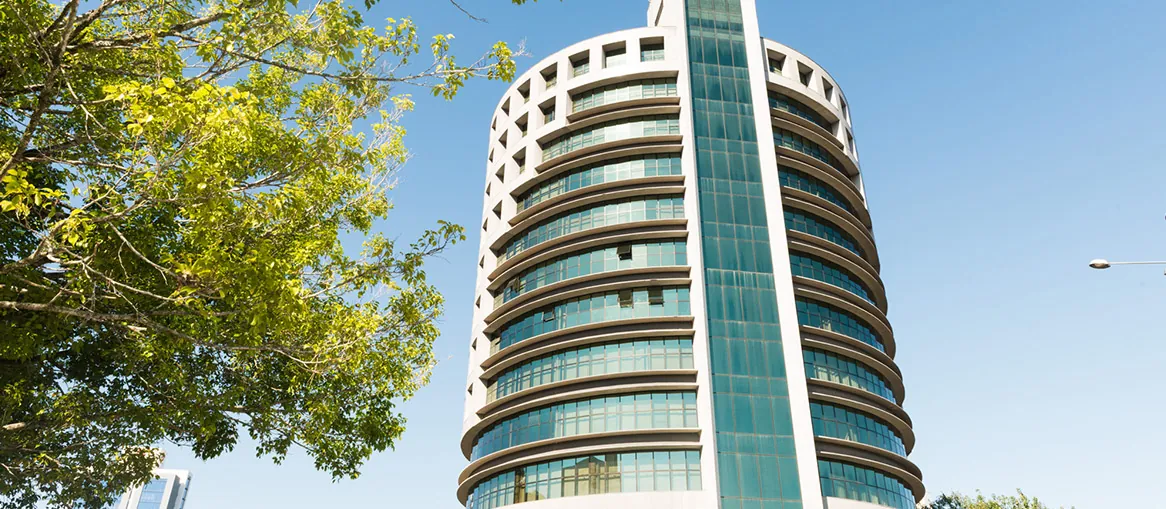
The clinic: Centro Clínico Santa Catarina, Rua Armando Odebrecht, 70 — suites 902 and 903, Garcia, Blumenau, Santa Catarina, Brazil.
A CBCT, not a photo · read by the surgeon himself · a written reply · preliminary until the in-person exam. The message includes your consent to how the clinic handles health data — read it first. Or by e-mail: atendimento@fernandogiovanella.com.